- Client
- Kubota Corporation
- Expertise
- Business / Strategy Design
- Date
Overview
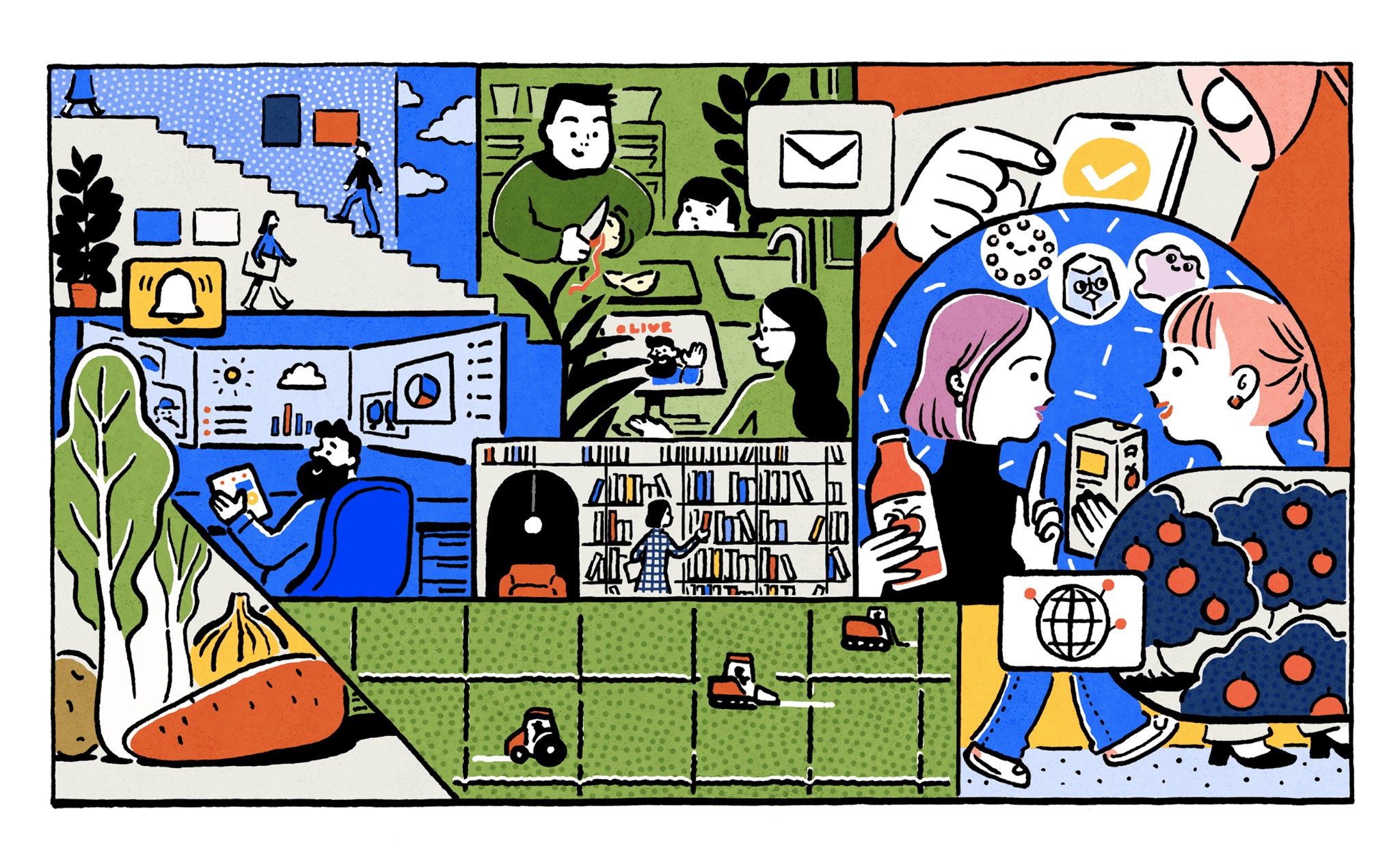
Envisioning future services offers great freedom, but it is also a highly difficult kind of project, with no correct answers and no absolute criteria for evaluation. The Design Center of Kubota Corporation and Goodpatch confronted the difficulty of creating future value with "the power of design." The initiative was carried out in two phases: in the first half, imagination-driven future scenarios were depicted as "short stories," and in the second half, that worldview was given concrete, tangible form as a "vision prototype." The process of giving shape to a vision of the future drew a strong response at an internal exhibition, leading to outcomes that opened up new possibilities for collaboration with other departments.
Client
Kubota Corporation
Since starting business as a cast metal manufacturer about 130 years ago, Kubota has brought to the world products that society needs — iron pipes for water supply, engines for agriculture and industry, machine tools, and more — under the keywords of "food," "water," and "the environment." While carefully carrying on its sincere approach to manufacturing, the company continues to build a new history of growth, leveraging the strengths and distinctive character cultivated over its more-than-a-century-long history to expand its business.
Summary
Challenges before the engagement
- The company did not want its future vision to end as a vague concept, but to connect it to concrete, "tangible" outputs
- The department lacked a systematic methodology for exploring future value and for the processes of shaping the future
Goodpatch's approach and outcomes after the engagement
- Broadened the team's horizons through exploration of signs of the future, and created emotionally relatable future scenarios in the form of eight short stories
- Gave concrete form to the scenarios' worldview as a vision prototype themed on interaction with AI
- Successfully presented the future service as a working prototype at an internal exhibition, earning strong interest and concrete consultation on collaboration from other departments
- Casual conversations about the future became more active within the team, producing an organizational change in which thinking about the future became the norm
Establishing a New Design Strategy Team and the Search for a "Tangible Future"
The project's starting point was the launch of the "Design Strategy Planning Team." The team was expected to depict future social trends and the future of the company's own products from a long-term perspective, formulate design strategies for next-generation products, and accelerate innovation within the company. At the same time, because the department lacked systematic knowledge of future forecasting, it was looking for an external partner with expertise.
On the Kubota side, there was a desire "not to just depict a vague future and be done with it, but to create something truly tangible."
In its search for an external partner with the knowledge and track record in future exploration and the ability to translate concepts into concrete form, Kubota approached Goodpatch, with the expectation that it could consistently guarantee high quality and know-how across everything from imagining future worldviews to UI and graphics.
Phase 1: Participatory Exploration of Future Signs and High-Resolution Future Scenarios via "Short Stories"
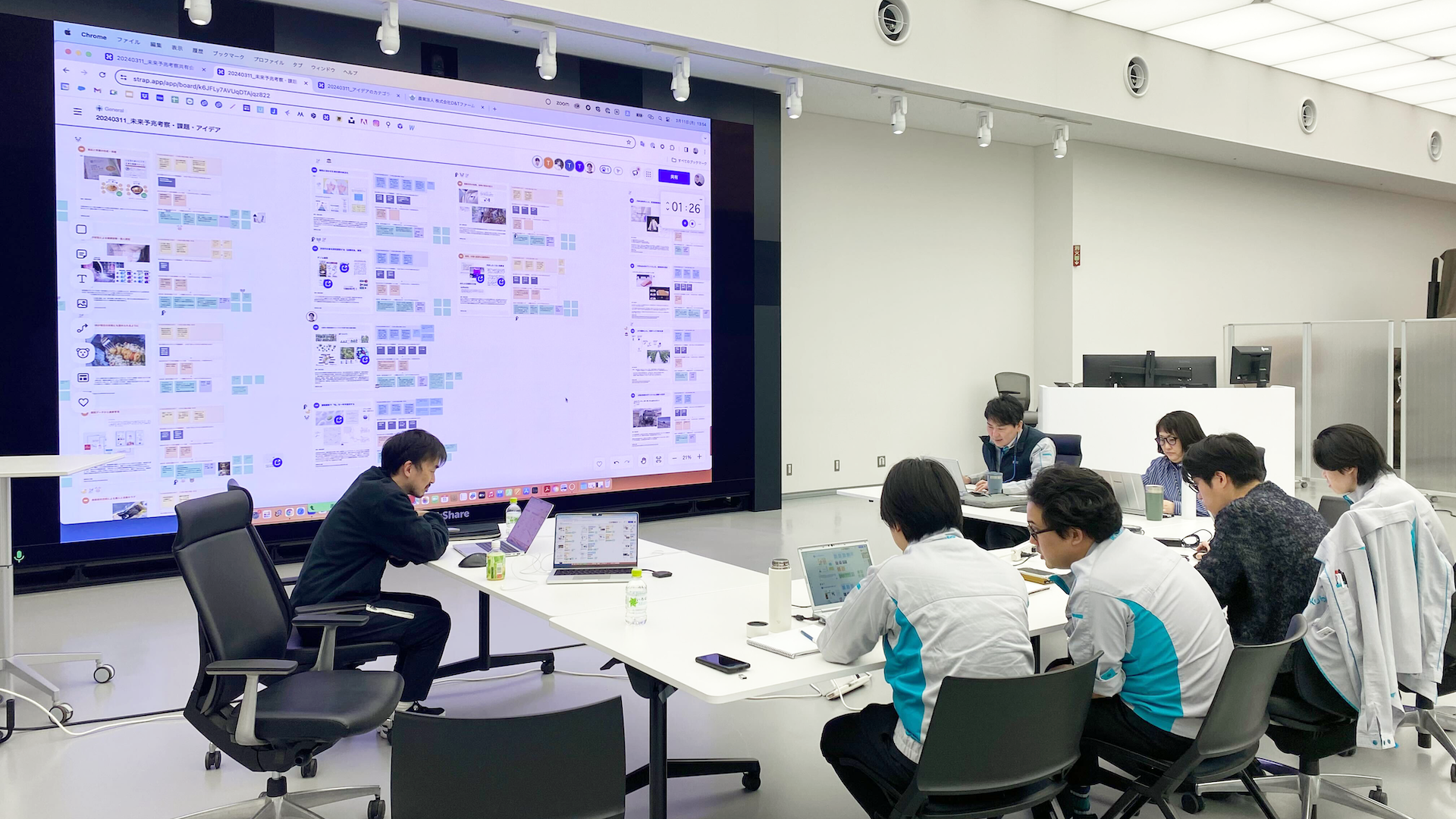
The project proceeded in two phases. In the first phase, Goodpatch supported "exploration of future signs" and "scenario creation" to depict a vision of the future. Building on the company-wide policies already shared regarding megatrends, Goodpatch designed a program to generate "ideas unique to designers." Without limiting the scope to the domain of food production, all six team members carried out multiple workshops in which each broadly explored, from their own individual perspectives, signs that hint at the future. In pursuing the design of a future with no correct answers, emphasis was placed on participants' own thoughts and on the differing perspectives among participants, generating ideas with both passion and breadth.
Looking back, a member of the Kubota team reflected: "Thinking back on it now, I feel that everyone's antennae — our field of view — expanded enormously, myself included."
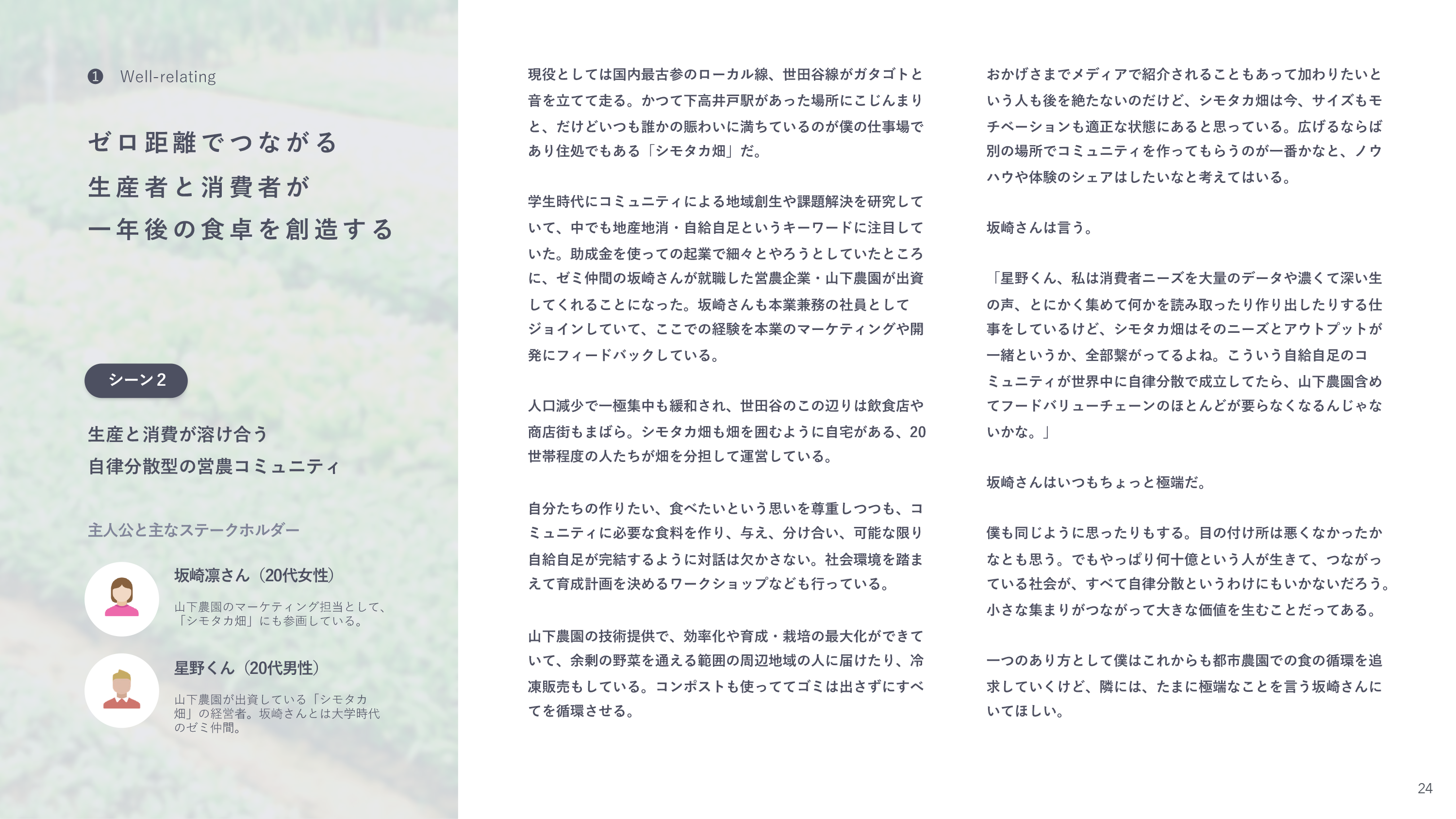
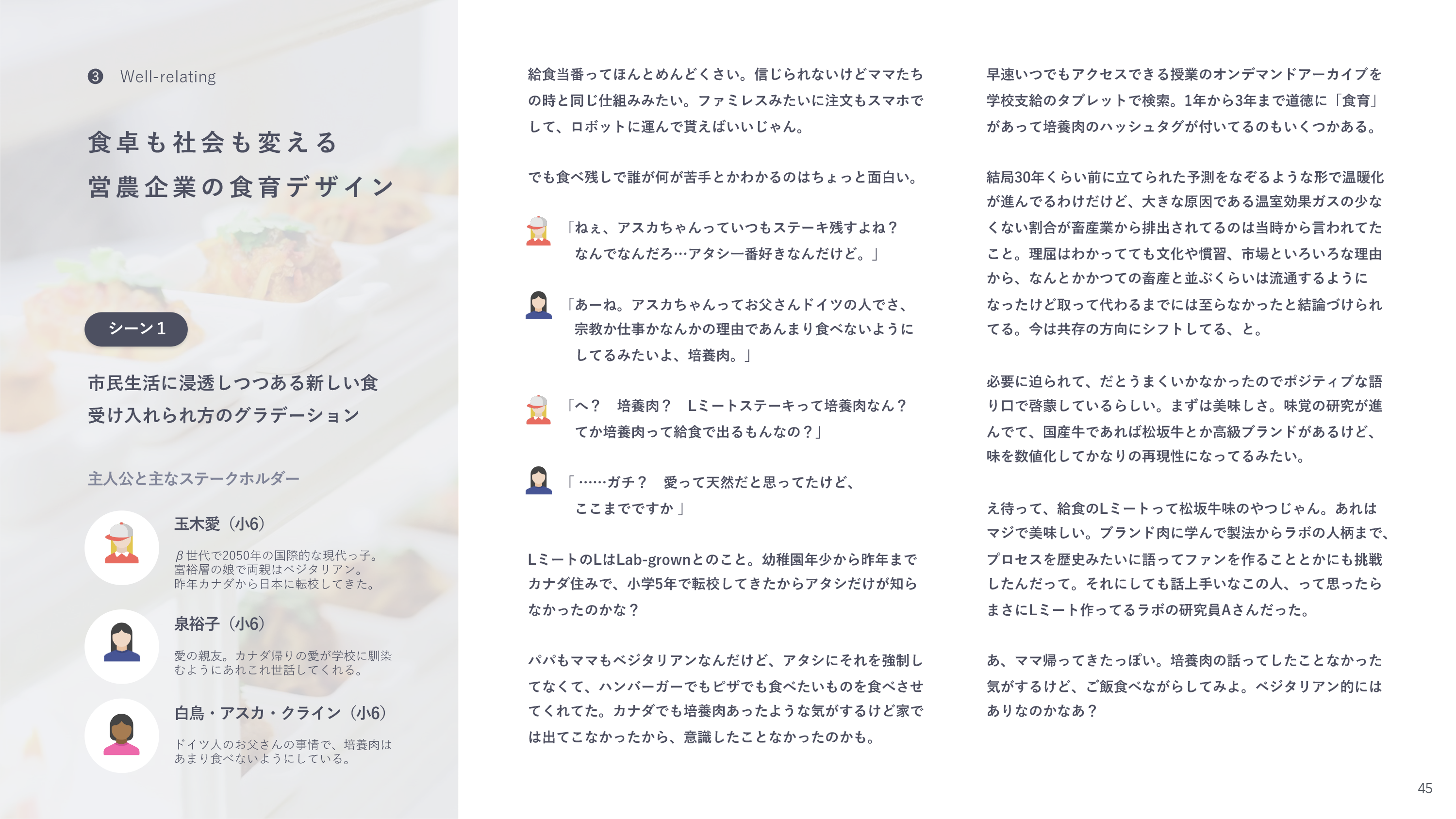
Next, based on the diverse perspectives and ideas gathered, the future image of society and its stakeholders were defined. Through repeated dialogue centered on content structured by Goodpatch, the team aligned on the elements they wanted to value from a design perspective focused on society and people, rather than staying stuck in the peripheral domains of existing businesses. Following discussions about "wanting to make the scenarios something readers could empathize with, told from the perspective of the characters in them," the future vision was ultimately compiled in the unique format of eight short stories.
This approach was novel in a context where, as one participant put it, "there are all sorts of future-vision documents out there, but most are written in a detached way, or amount to 'it'll probably turn out something like this.'"
Phase 2: A "Vision Prototype" That Gives Concrete Form to the Future Scenarios and Poses Questions
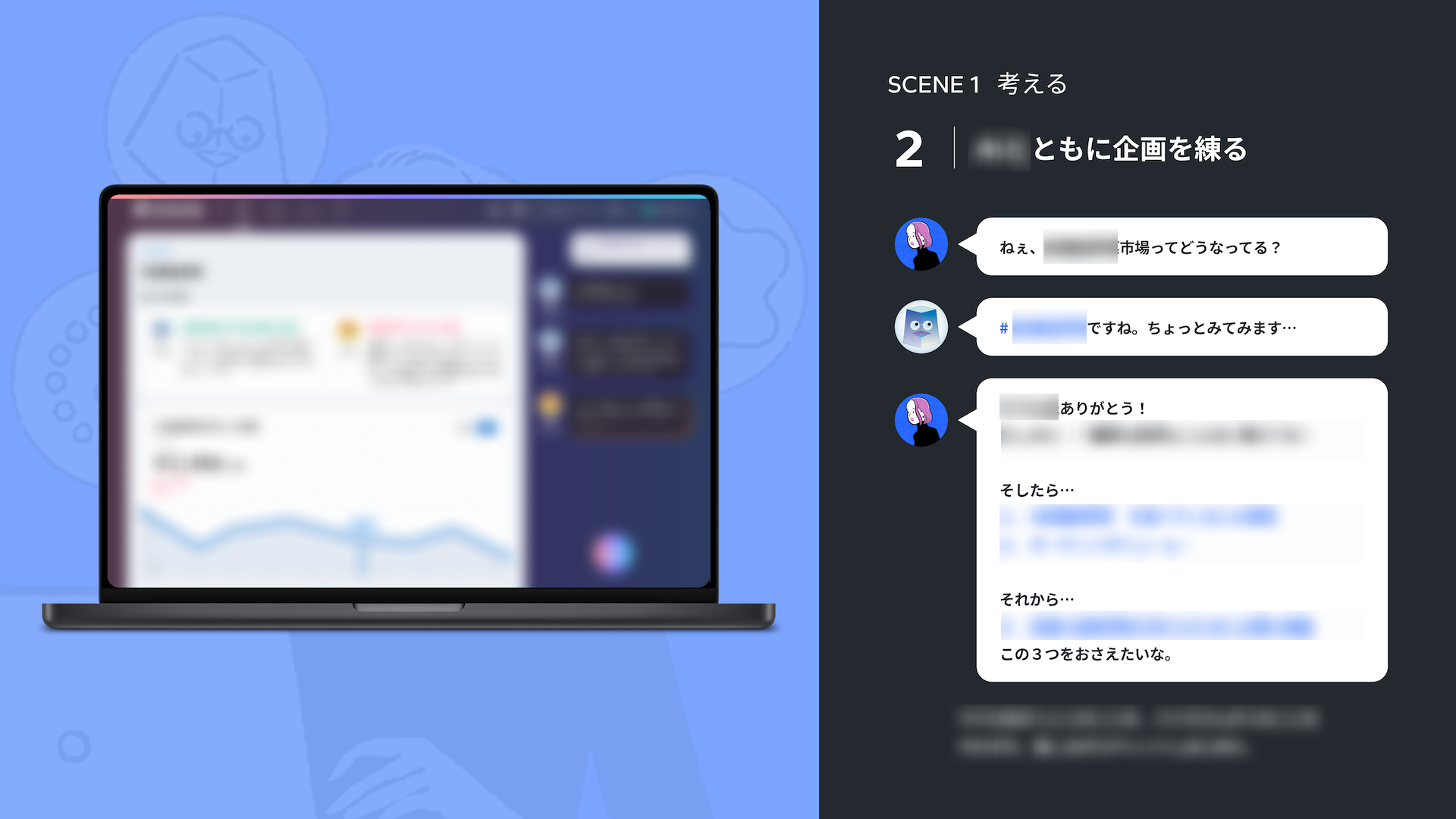
The second phase started in order to translate the vision of future society shaped in Phase 1 into more concrete output. Here, while carrying over the future worldview that had been created, the focus shifted to creating a UI prototype themed on "AI utilization" — a promising, effective approach for food production settings, which are unpredictable and hard to standardize. Because there was initially a vast number of scenarios the team wanted to depict, the value they most wanted to convey was carefully organized. The team narrowed down what to prototype and was able to clarify what they wanted people who touched it to feel.
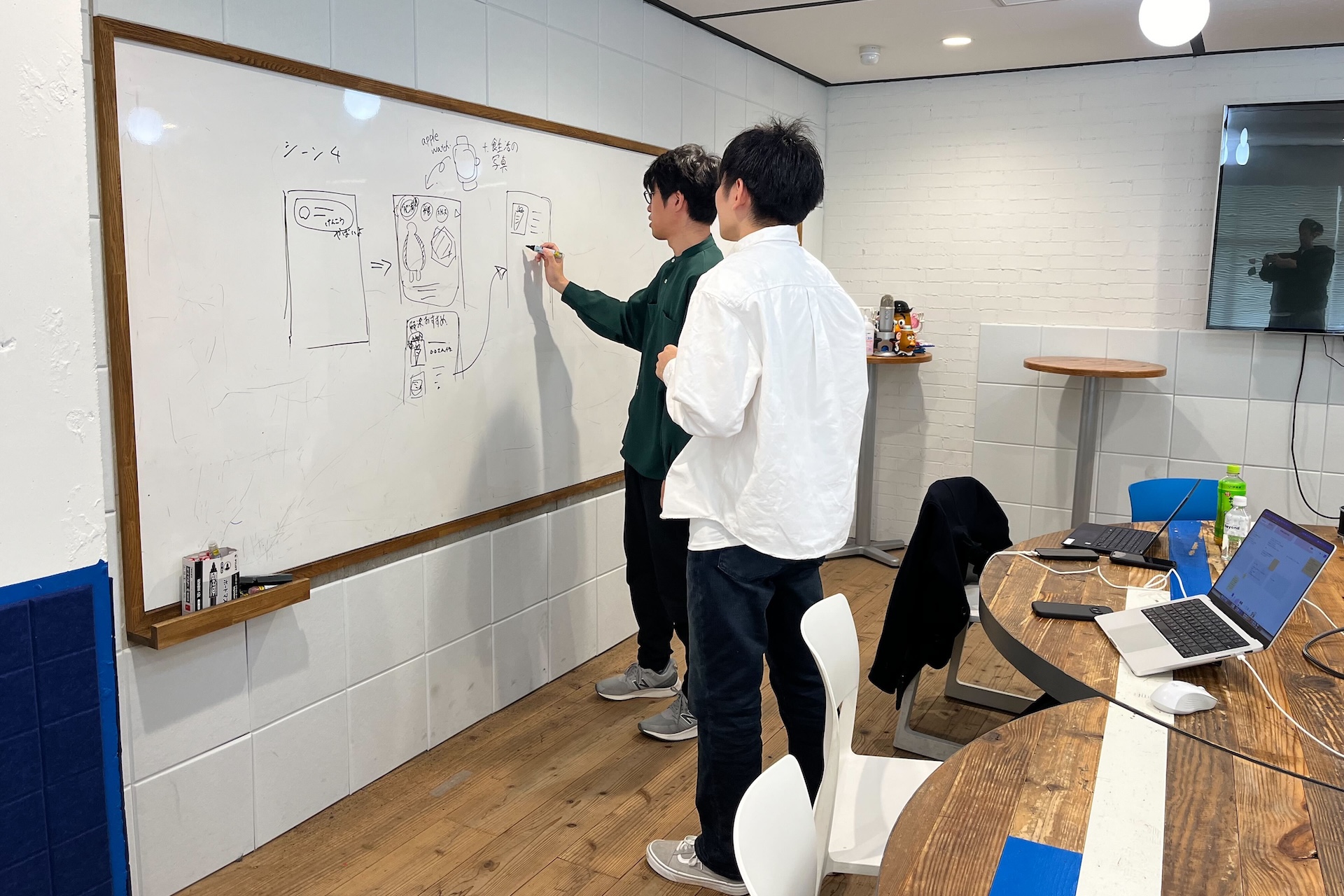
In addition, while communication had until then been primarily online, discussions were also held at the Goodpatch office during the process of giving the prototype concrete form. Sketching images on a whiteboard led to discovering areas where detailed specifications had not yet been thought through and working through discussions to resolve them — a process that proved necessary for the subsequent prototype production.
From Kubota came the observation: "Even when we say 'UI,' once you base it on dialogue with an AI, you have to properly think through things like 'what line does it say at this moment?'"
Touching the Future Through the Power of Design, Generating Innovative Dialogue Within the Company
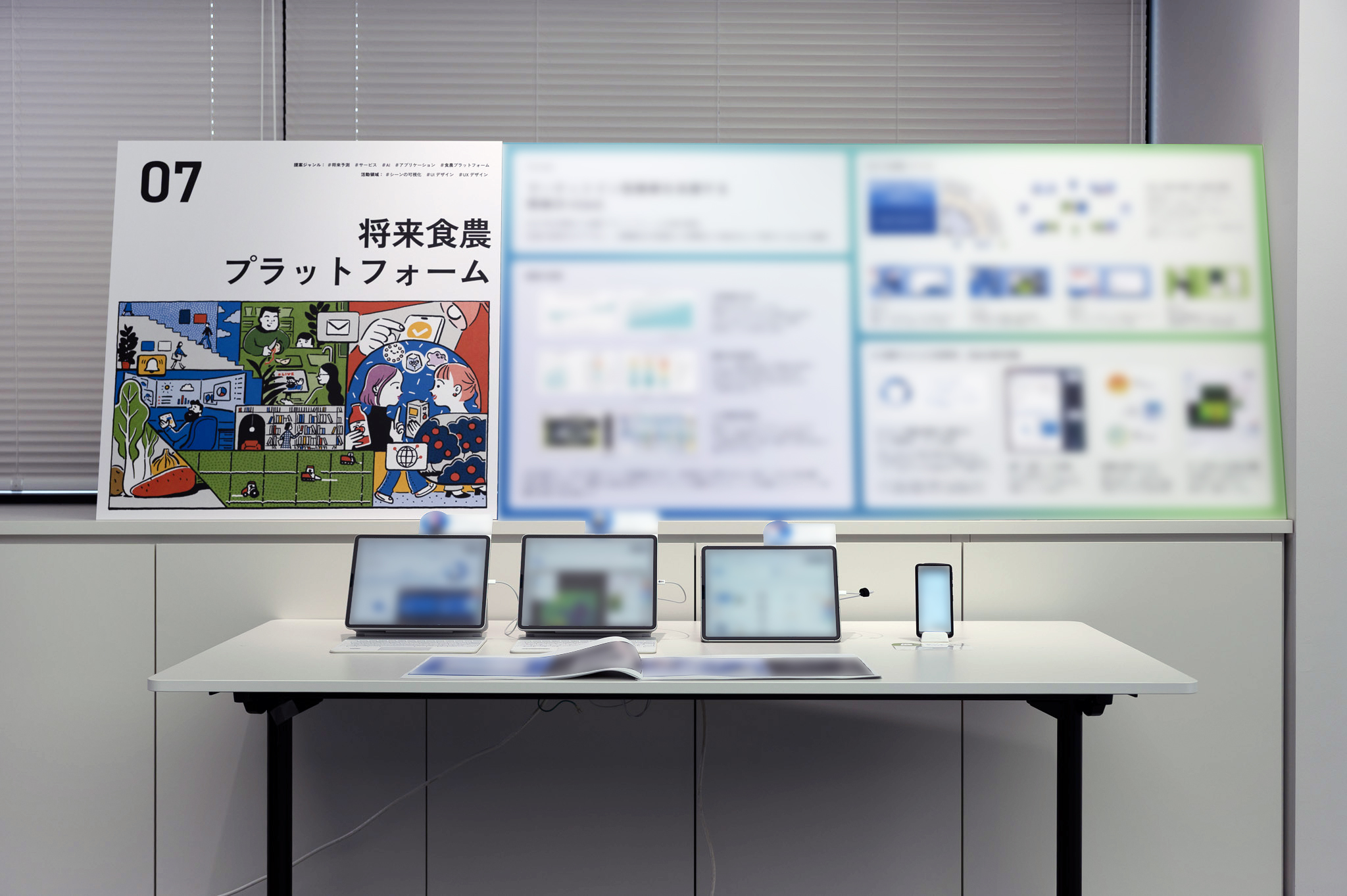
In this project, the goal was to present the vision prototype at an internal exhibition and gather feedback. In the end, many people from R&D and business divisions attended, and the response was substantial.
Amid voices of surprise that visuals evoking the future were actually operable, the reality of the vision prototype prompted concrete questions from developers who actually work with AI — "What kind of program is running behind this?" "How did you train it?" — making the exhibition a occasion that exceeded expectations.
Presenting a "tangible future" at the internal exhibition helped demonstrate the value of the Design Center's activities beyond functional aspects, and inquiries and concrete consultations about collaboration began to arrive from other departments.
A positive comment was heard from the team: "This is partly my own ambition, but while the Design Center at Kubota fundamentally does design work in response to requests, I think it would be exciting if the Design Center could become the one making requests and having things built."
Client's Voice
"I think perhaps the biggest outcome was truly being able to all face the same direction — knowing what everyone is thinking. When I was first assigned to this team, there were times I couldn't feel confident in the significance of thinking about future visions. In the end, if you don't properly land it in the business, it becomes 'what was that activity even for?' — so I struggled with how to position the activity and how to present its results. By giving concrete form to our thinking about the future and communicating it to everyone, ripple effects and new connections I hadn't anticipated started to emerge, and that alone is a major outcome. Being able to now say with confidence 'this is meaningful in these ways!' is a big change."
Interview
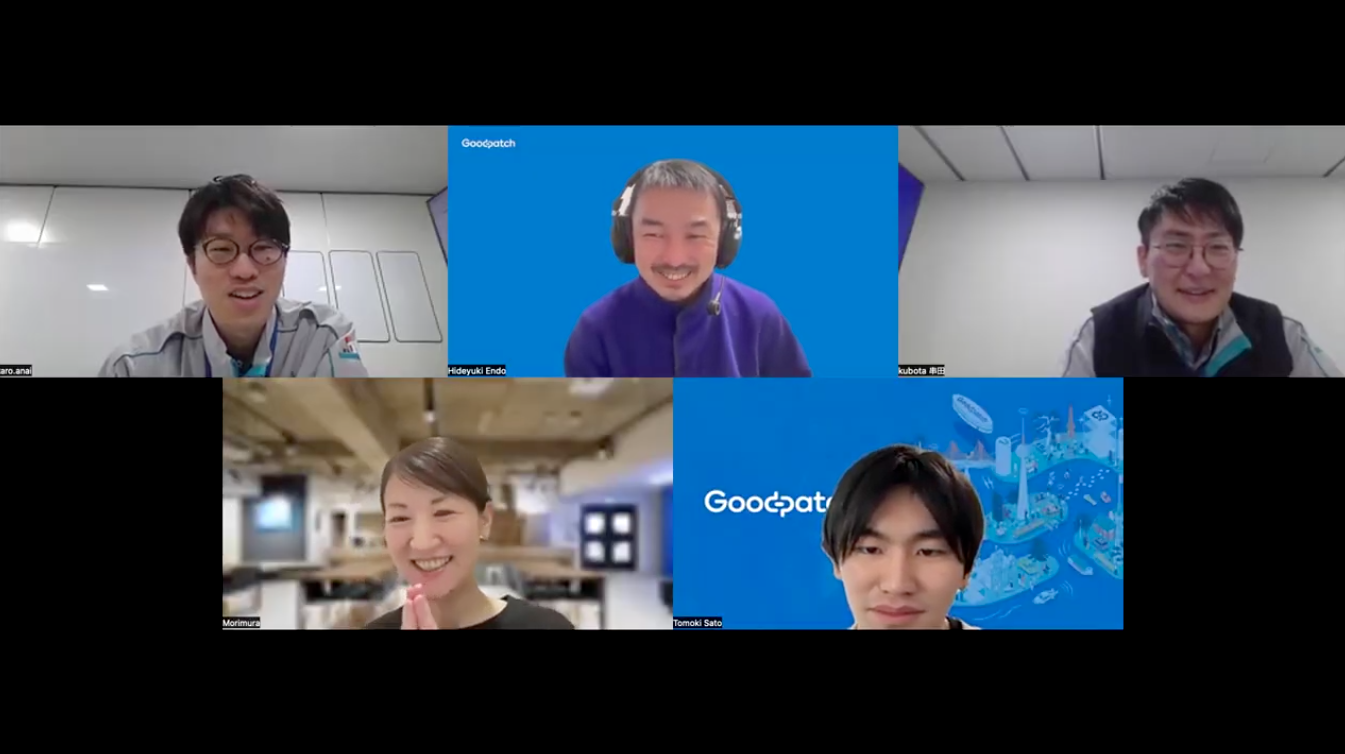
Further details of this project are also available in this interview:
Accelerating with Tangible Prototypes: What Will Kubota's Future Support for Producers Look Like?
Credit
Design Strategist: Hideyuki Endo
Design Strategist: Noriko Morimura
Design Strategist: Daiki Sato
Supervision / Quality Manager: Kazuhiro Izawa
BX Designer: Ayaka Okubo
Account Manager: Shuntaro Takahashi
Inquiries about this project
For questions or consultations about this project, please feel free to reach out using the form below.




Get In Touch
Talk to us about anything—UI/UX design for services and products, brand building, AI adoption, new business development, or management and business strategy.