- Client
- DAIKIN INDUSTRIES, LTD.
- Expertise
- Business / Strategy Design
- Date
Overview
The Design Group of Daikin Industries, Ltd. turned to an approach using "future insight" in order to formulate near-future business themes tied to management strategy. With Goodpatch as its partner, the group generated 27 "social change hypotheses" and 70 business ideas through a series of six workshops and interviews with experts, ultimately formulating six business themes that also take business viability into account. This case study introduces the process from future insight through to the concretization of business ideas.
Client
DAIKIN INDUSTRIES, LTD.
Founded in 1924, Daikin Industries, Ltd. is known as a global leading company in air conditioning. Under the vision of "providing answers to the world through new value in 'air' and 'the environment,' and contributing to the sustainable development of society," the company operates in more than 170 countries worldwide with "air conditioning," "chemicals," and "filters" as its pillars. Providing a wide range of products including residential and commercial air conditioners, refrigeration units, and fluorochemical products, the company pursues technological innovation while aiming to combine improved quality of life with reduced environmental impact, and focuses on solving social issues through its business.
Summary
Challenges before the engagement
- The group wanted to formulate near-future business themes from a perspective unique to a design department
- It aimed for business themes with concrete business substance, linked to the company's management plan
- By having the entire group experience the process from business idea generation to business launch, it wanted to build a structure capable of proposing and supporting projects all the way to commercialization in the future
Goodpatch's approach and outcomes after the engagement
- Systematically supported the process from future insight to business idea generation through six workshops attended by the entire group and interviews with experts
- Achieved the creation of 27 social change hypotheses and 70 business ideas, and the formulation of 6 concrete business themes
- Turned the project process into reusable assets, including workshop methods and intermediate deliverables
The Design Group's Challenge to Expand Daikin's Possibilities
Daikin Industries, Ltd. (hereinafter "Daikin"), one of the world's leading air conditioning manufacturers, creates new value in "air" and "the environment" and aims to realize a sustainable society globally.
The company's Design Group had conceived and proposed various businesses over the years, but looking back, there were cases where proposals were praised as "good ideas" yet ended up as pie in the sky, never reaching execution.
In response to this situation, the group explored "how to conceive near-future businesses from a design department's unique perspective while staying linked to the management plan," and decided to conduct "future insight workshops" with the entire group.
Adopting a Future-Insight Process to Build a Self-Sufficient Structure
There were two aims behind commissioning the future-insight project externally.
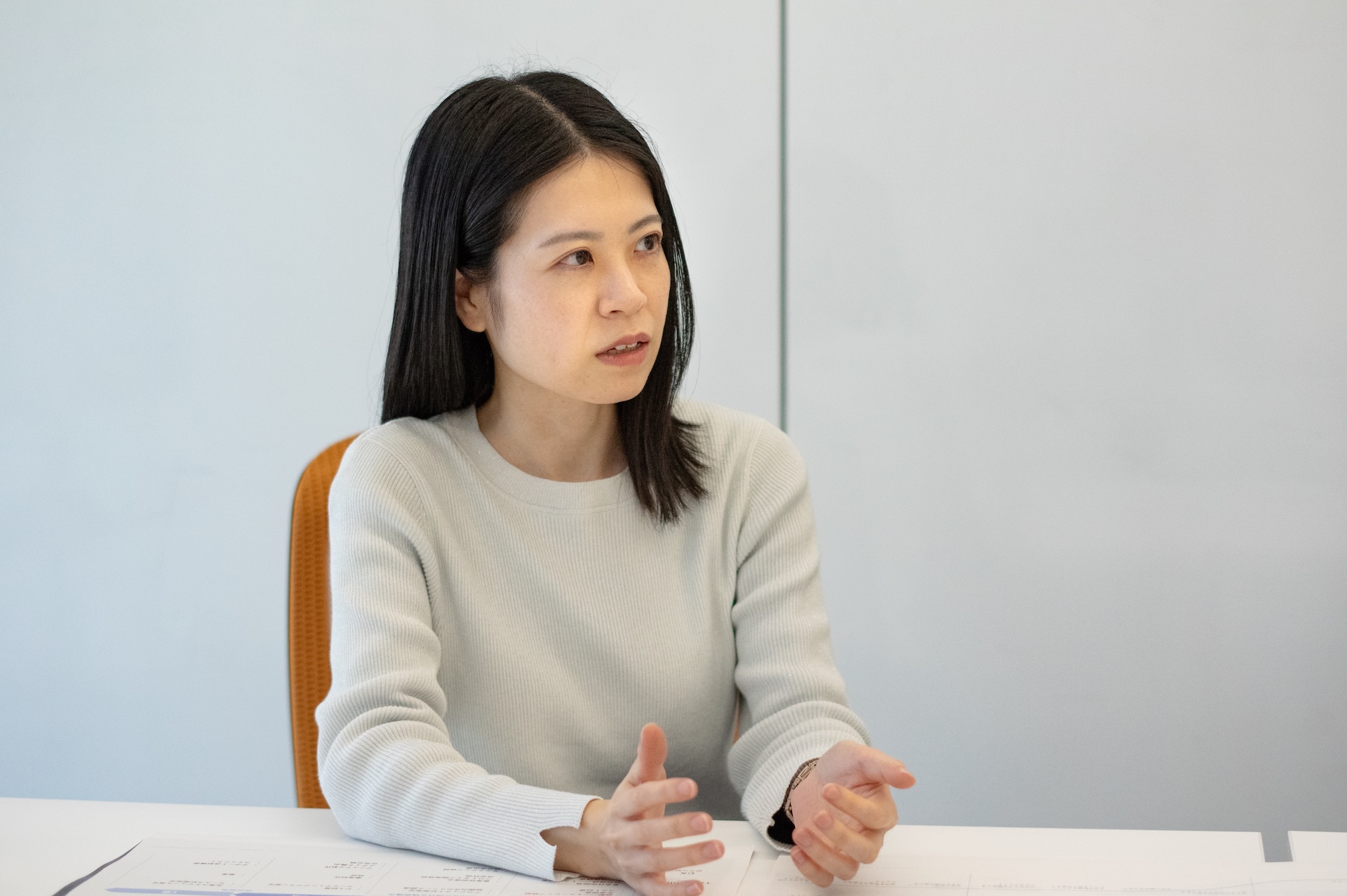
"The first was for every member of the Design Group to experience the future-insight process firsthand. The second was to formulate ideas tied to the company's management strategy as business themes from a designer's unique perspective. To think with a view toward actually landing ideas as businesses, we first needed to learn the correct process. In addition, we were also conscious of reaching a state where our group could run the process on its own after the project ended."
— Hama, Daikin Industries
Among the reasons for choosing Goodpatch as the external partner were conviction in a proposal that looked ahead to the concreteness of deliverables and their contribution to the business — "what value will the final output bring to Daikin?" — and resonance with Goodpatch's strategic way of thinking.
"Goodpatch's 'five-stage model of design' holds that experience design that is consistent from strategy through to surface leads to business differentiation. I personally resonate with this way of thinking, and I felt trust in their strategy-focused stance and in the way they accompany you while keeping sight of value from the user's perspective."
— Hama, Daikin Industries
A Journey of Co-Creating the Future: Goodpatch's Hands-On Future-Insight Support
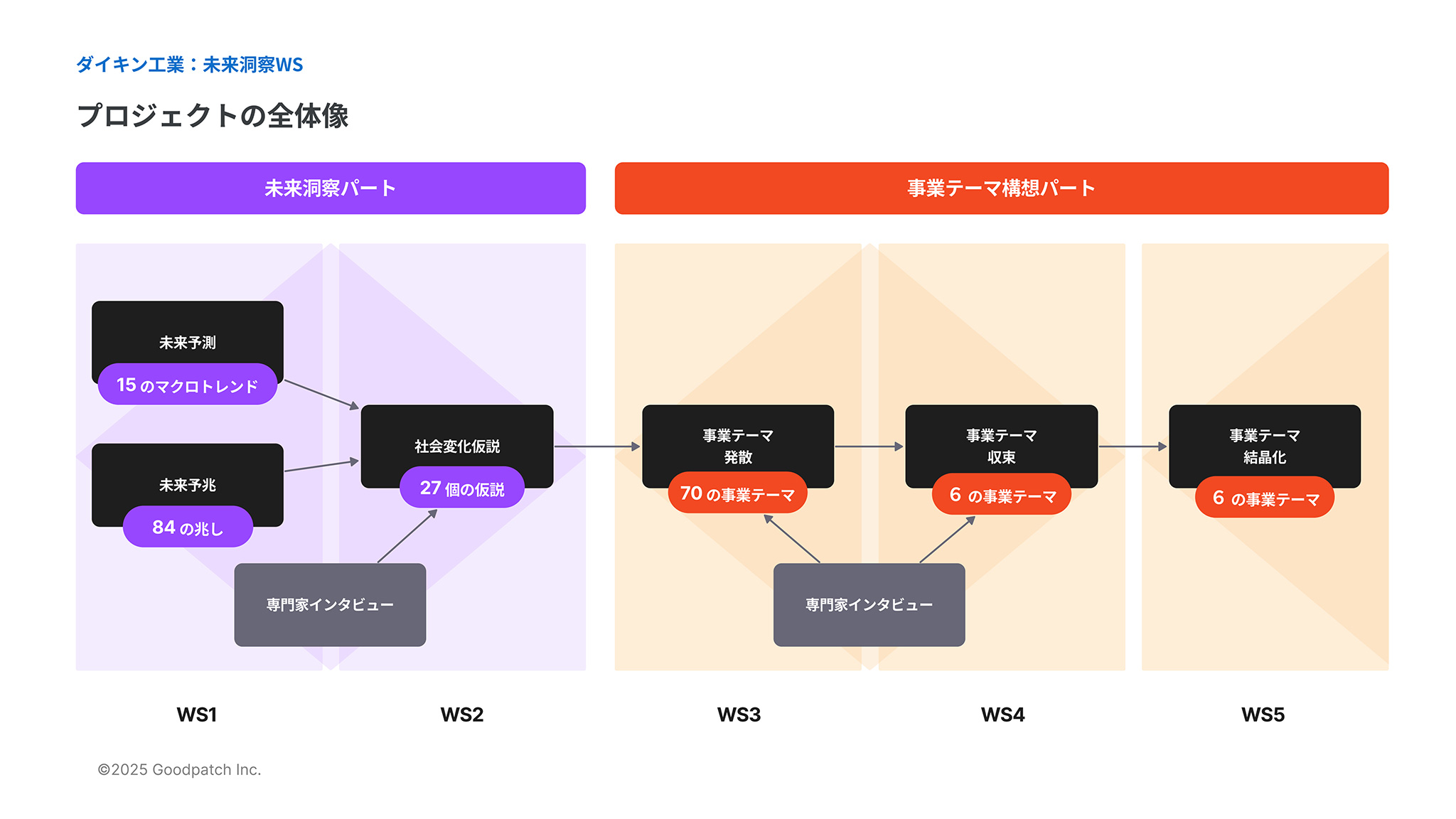
To meet the goals the Daikin Design Group wanted to achieve, Goodpatch meticulously designed and conducted a series of six "future insight workshops."
The workshop series consisted of two parts: "future exploration" and "business conception." It was designed so that participants could learn future-insight methods systematically and practically, and formulate business themes from a designer's unique perspective.
1. Future exploration part: Gaining insight into changes in future society from multiple perspectives
The first half focused on exploring future possibilities from multiple angles, beginning with input on macro trends in the thematic domains Daikin is focusing on.
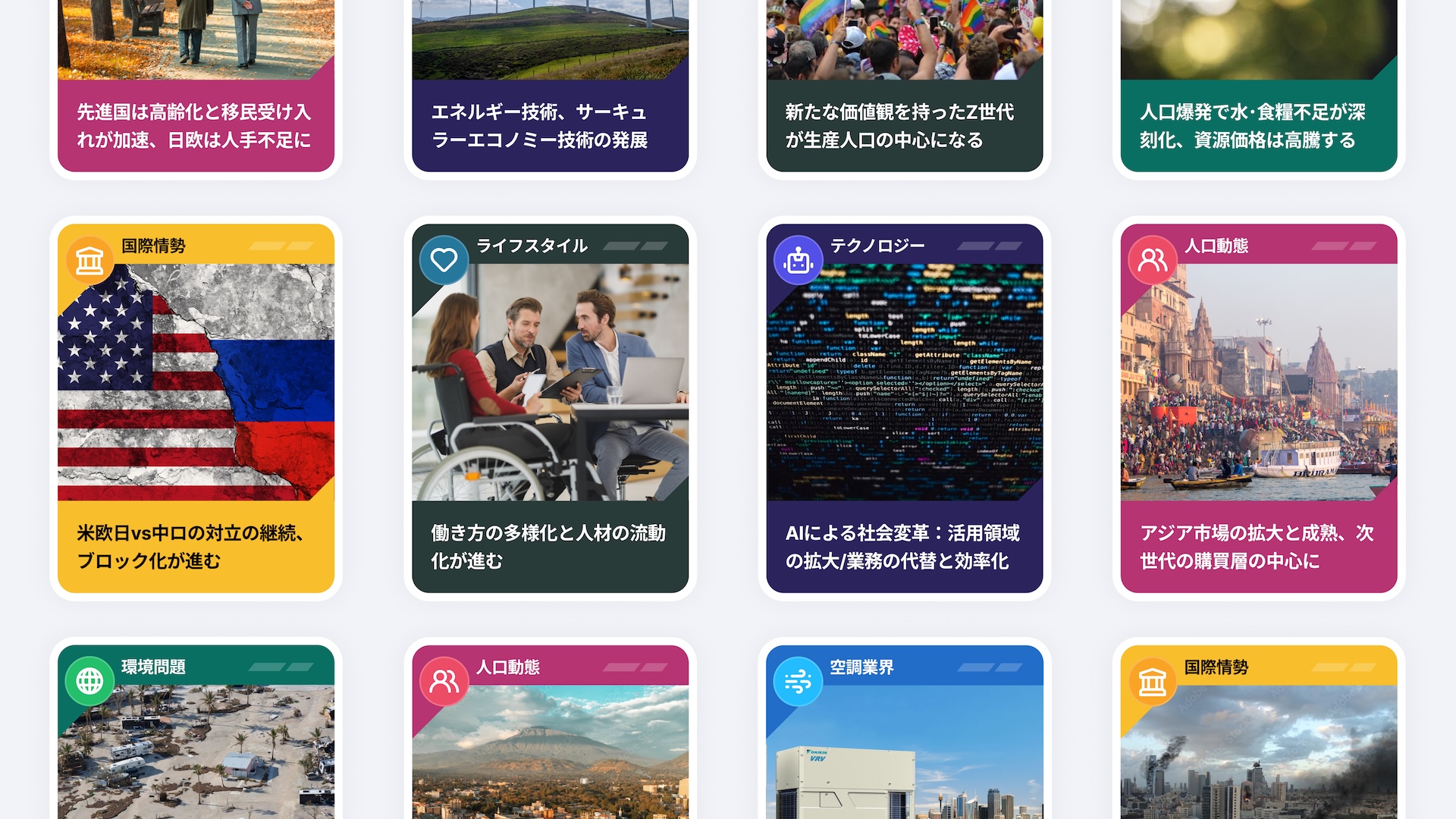
As a tool for understanding trends that could occur in the near future simply and intuitively, Goodpatch created a set of 15 "macro trend cards." Using the cards, groups discussed social issues and possibilities that could arise in the future, building an understanding of the large-scale changes relevant to the company's business.
Next came the "future signs exploration exercise." Each participant individually explored and examined cases and phenomena that hint at the future, followed by discussion within teams.
By broadening fields of view that tend to become short-sighted with respect to the business, drawing out individuals' interests and the free ideas and viewpoints unique to designers, and creating opportunities to share them, the interaction within the group was maximized.
The various forecasts and signs obtained this way — together with the expert interviews described below — were integrated with the hypotheses each team created, and distilled into 27 "social change hypotheses."
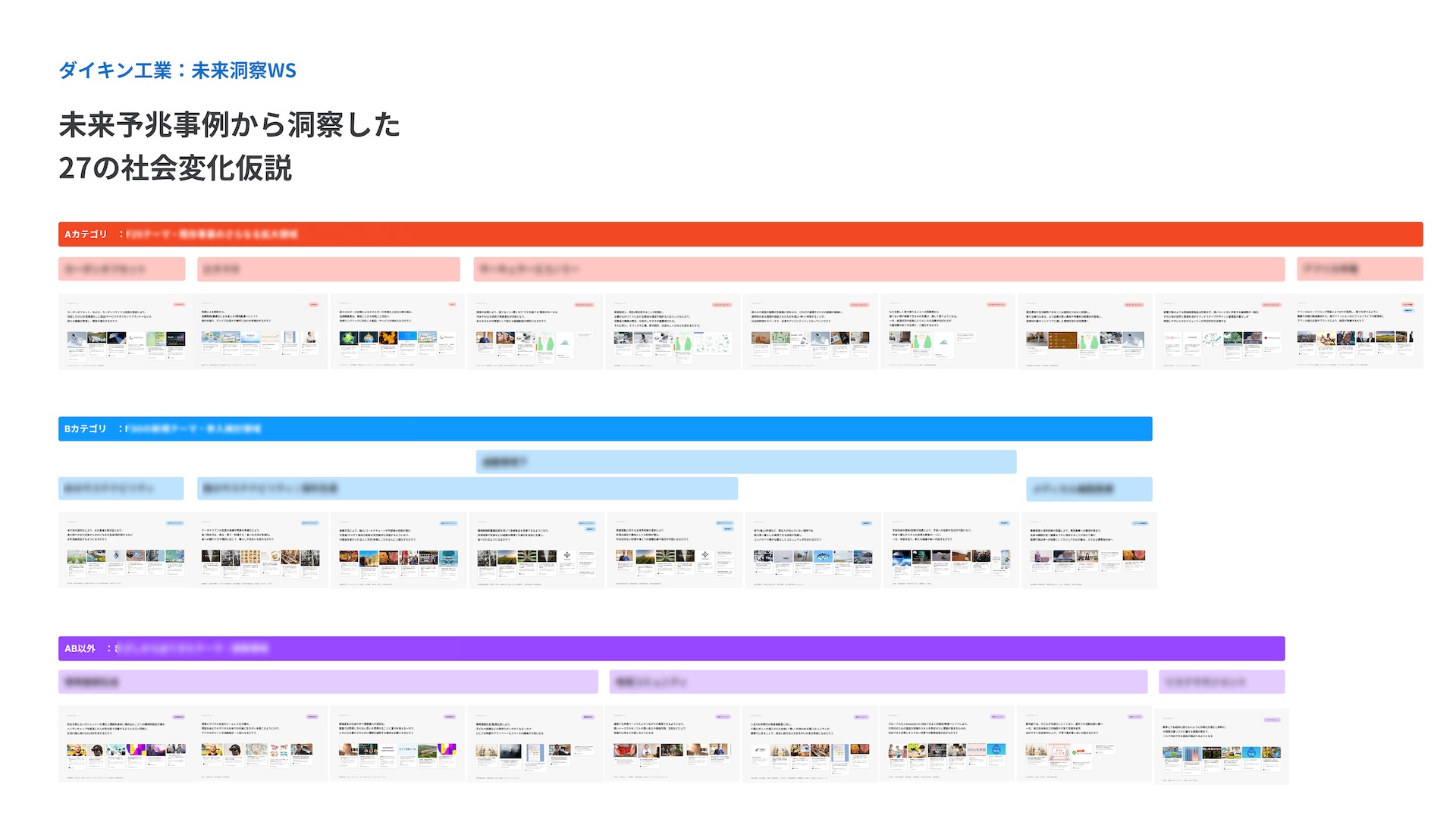
2. Business conception part: Generating ideas that connect the company's strengths and weaknesses, present and future
The second half of the workshops aimed to connect the diverse seeds of ideas and social change hypotheses generated in the first half to Daikin's actual businesses, elevating them into concrete business themes.
First, an exercise was conducted in which each participant considered and shared the company's strengths and weaknesses. Freely combining these with the social change hypotheses produced as many as 70 business ideas.
Then, toward concretizing the concepts, the ideas were narrowed down to six business themes that Daikin — and the Design Group — felt meaningful to pursue. In doing so, participants not only clarified the framework of each idea but also examined "what the Design Group can do" within each theme.
"Competitive advantage, mapping out implementation steps, economics, target setting, cost structure — areas that in normal work would be handled by separate people — we thought through and compiled as a team, which taught us how to keep ideas from ending as fantasies."
— Hama, Daikin Industries
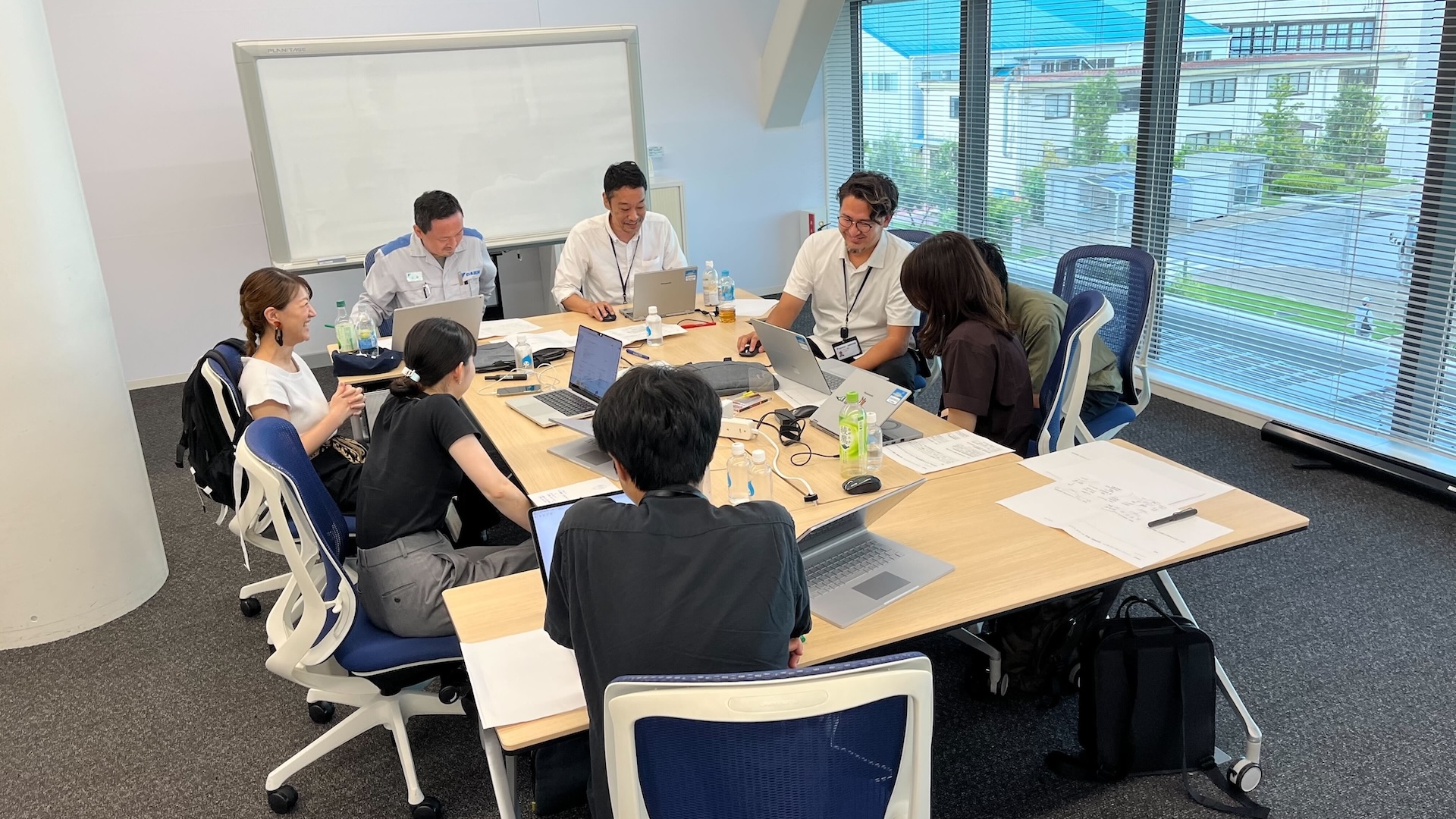
Gaining New Knowledge and Deepening Hypotheses by Involving Experts
A key point of this project was that "expert interviews" — actually speaking with experts in the relevant fields about hypotheses and ideas — were built into the process twice.
In the first-half "future exploration part," the interviews were conducted to acquire peripheral knowledge for idea generation and to discover new questions. By incorporating objective viewpoints and the latest specialized knowledge unavailable in internal discussions, the resolution of ideas was dramatically raised, while at the same time the significance of pursuing each theme could be verified early.
In the second-half "business conception part," interviews were conducted to grasp the ideas' potential as businesses and the challenges in advancing them. Hearing experts' unfiltered voices, complete with firsthand experiences, appears to have been an extremely valuable opportunity for the participating members.
"Internet research can gather information as such, but it rarely produces depth of knowledge. In contrast, what we heard directly from experts was of an entirely different density. With Goodpatch also designing the interviews, I think we were able to conduct deep hearings."
— Saito, Daikin Industries
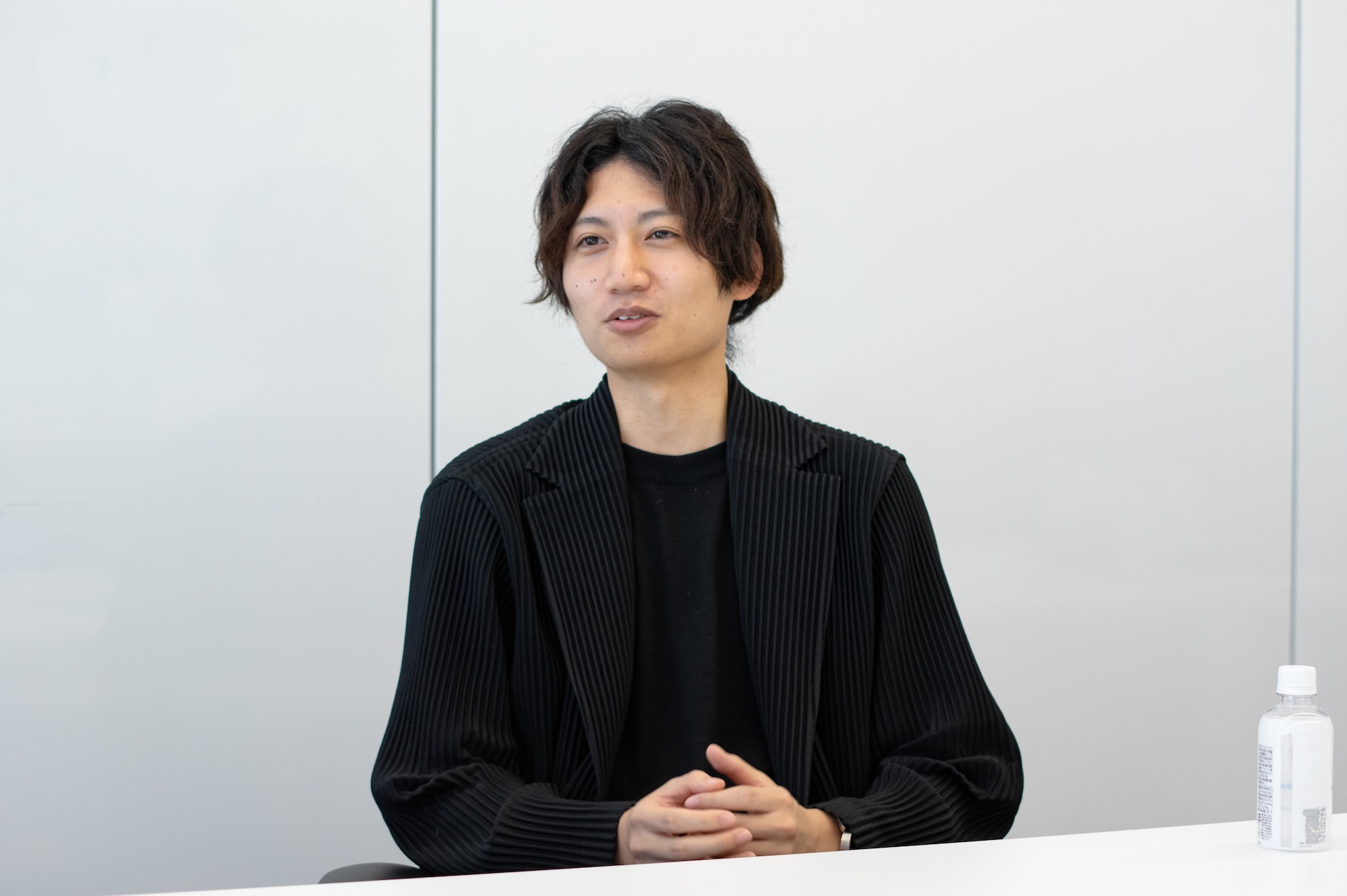
Client's Voice
Finally, the two participants offered their overall reflections.
"It exceeded expectations. With the cooperation of the knowledgeable Goodpatch team, being able to understand the process as intended was a huge gain. Initially there was also a proposal to conduct future insight in-house only, but I don't think we could have produced results of this level. We truly realized just how much needs to be considered to land ideas as businesses and communicate them persuasively to other groups, and I think we were able to reconfirm the importance of the strategy, philosophy, and story underlying an idea."
— Hama, Daikin Industries
"The Goodpatch members were easy to talk to, and I had the impression they were thorough about lowering the psychological hurdle to voicing opinions. When we generate ideas internally, they tend to converge on things the company already seems able to do, but we were able to break out of that shell, and I think a wide range of business ideas emerged. I see value in the fact that themes that would ordinarily have disappeared at the consideration stage survived as final business ideas."
— Saito, Daikin Industries
Generally, design teams at manufacturers do much of their work on questions like "how do we translate other departments' plans and technologies into design," and environments where designers engage in business planning from scratch are still rare.
At the same time, this initiative by the Daikin Design Group was an opportunity for us at Goodpatch to strongly feel, once again, the potential of designers. We hope this workshop series becomes a catalyst for expanding the breadth of design and the fields where all of them can thrive.
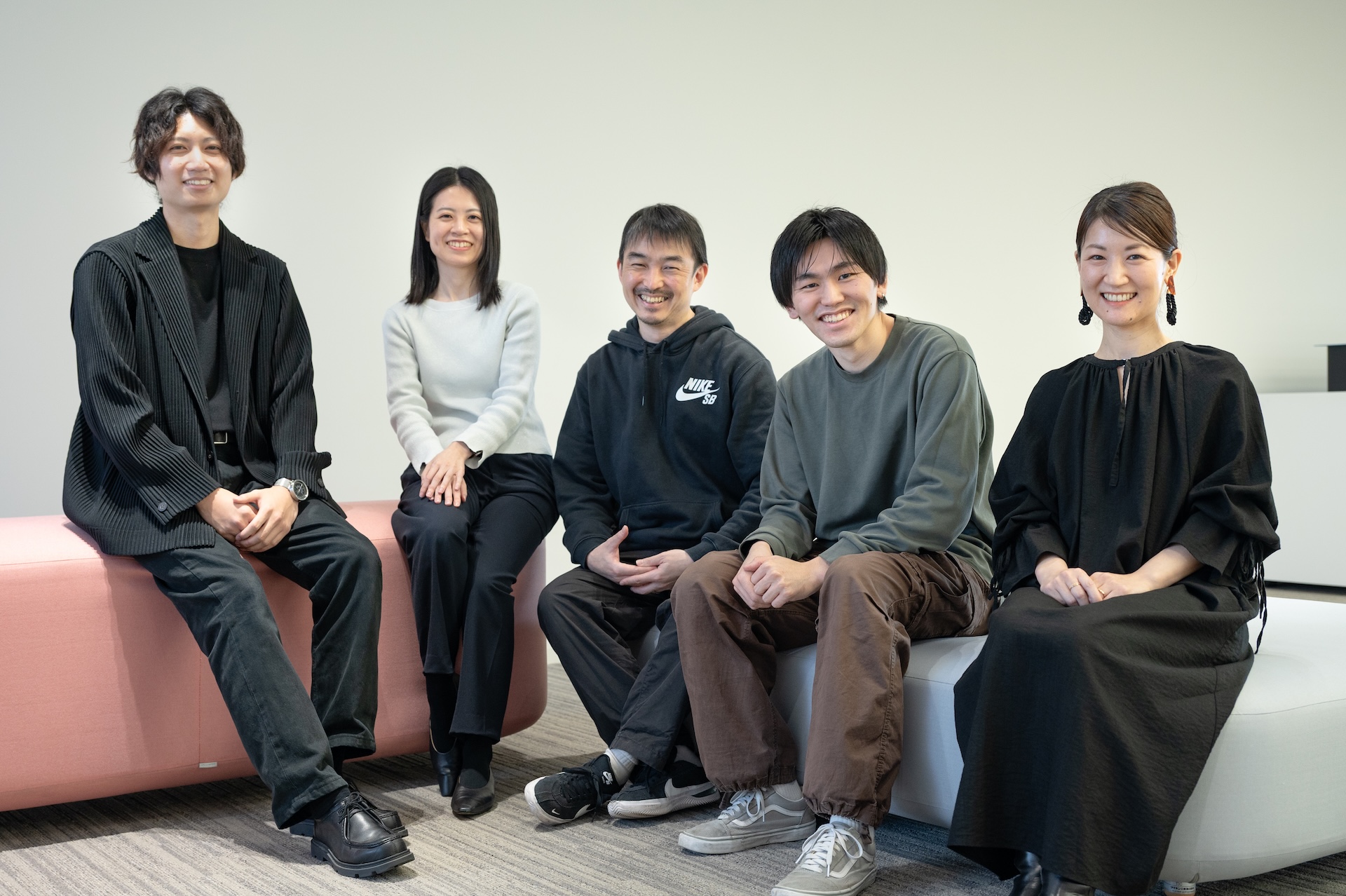
Interview
Further details of this project are also available in this interview:
Another interview is also published on DAIKIN INDUSTRIES' website. Please take a look at this article as well.
>> The Importance of "Future Insight" in Design Management | DAIKIN INDUSTRIES, LTD.
Credit
Design Strategist: Hideyuki Endo
Design Strategist: Noriko Morimura
Design Strategist: Daiki Sato
Inquiries about this project
For questions or consultations about this project, please feel free to reach out using the form below.





Get In Touch
Talk to us about anything—UI/UX design for services and products, brand building, AI adoption, new business development, or management and business strategy.