- Client
- KOKUYO Co., Ltd.
- Expertise
- DX Support
- Date
Overview
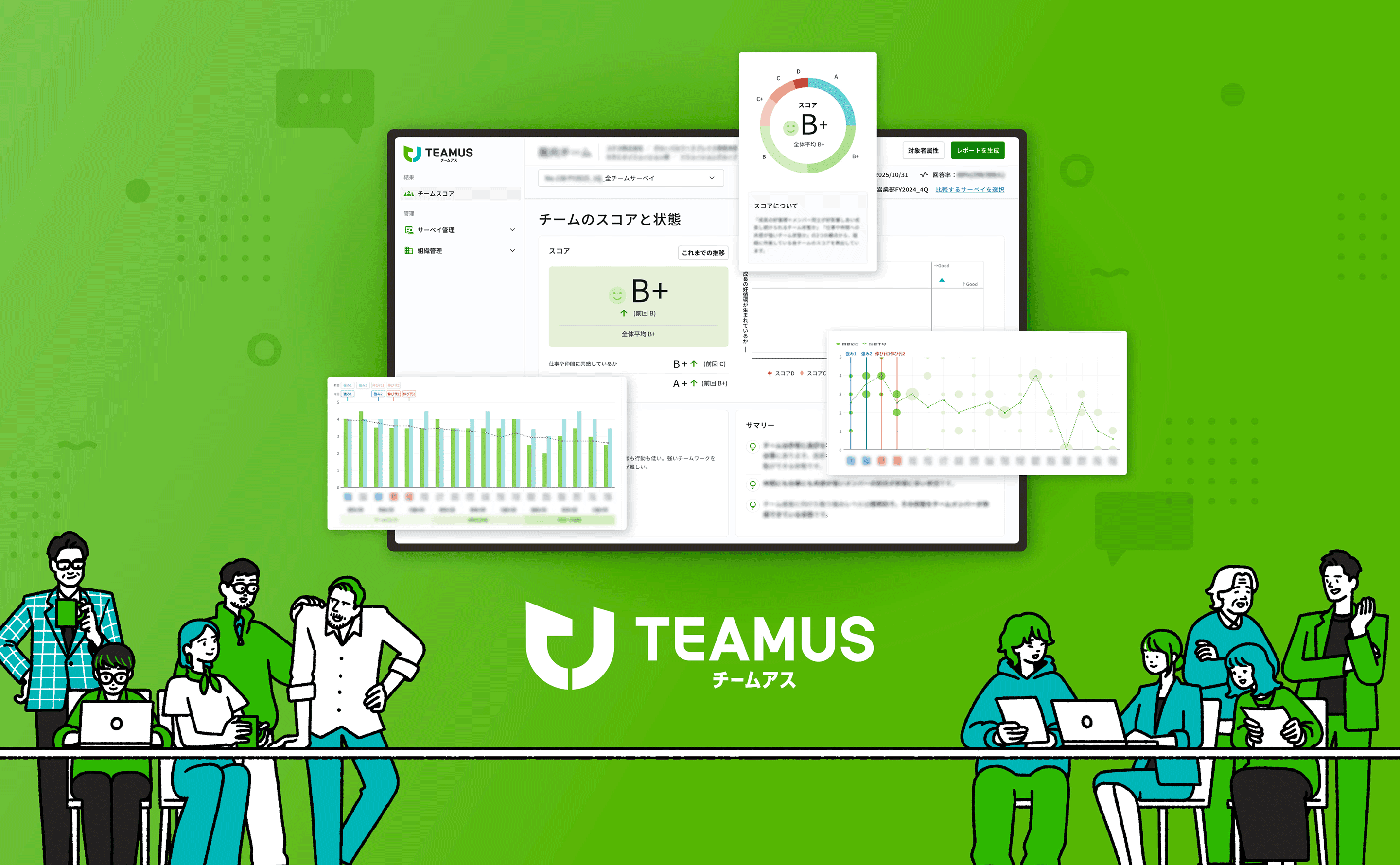
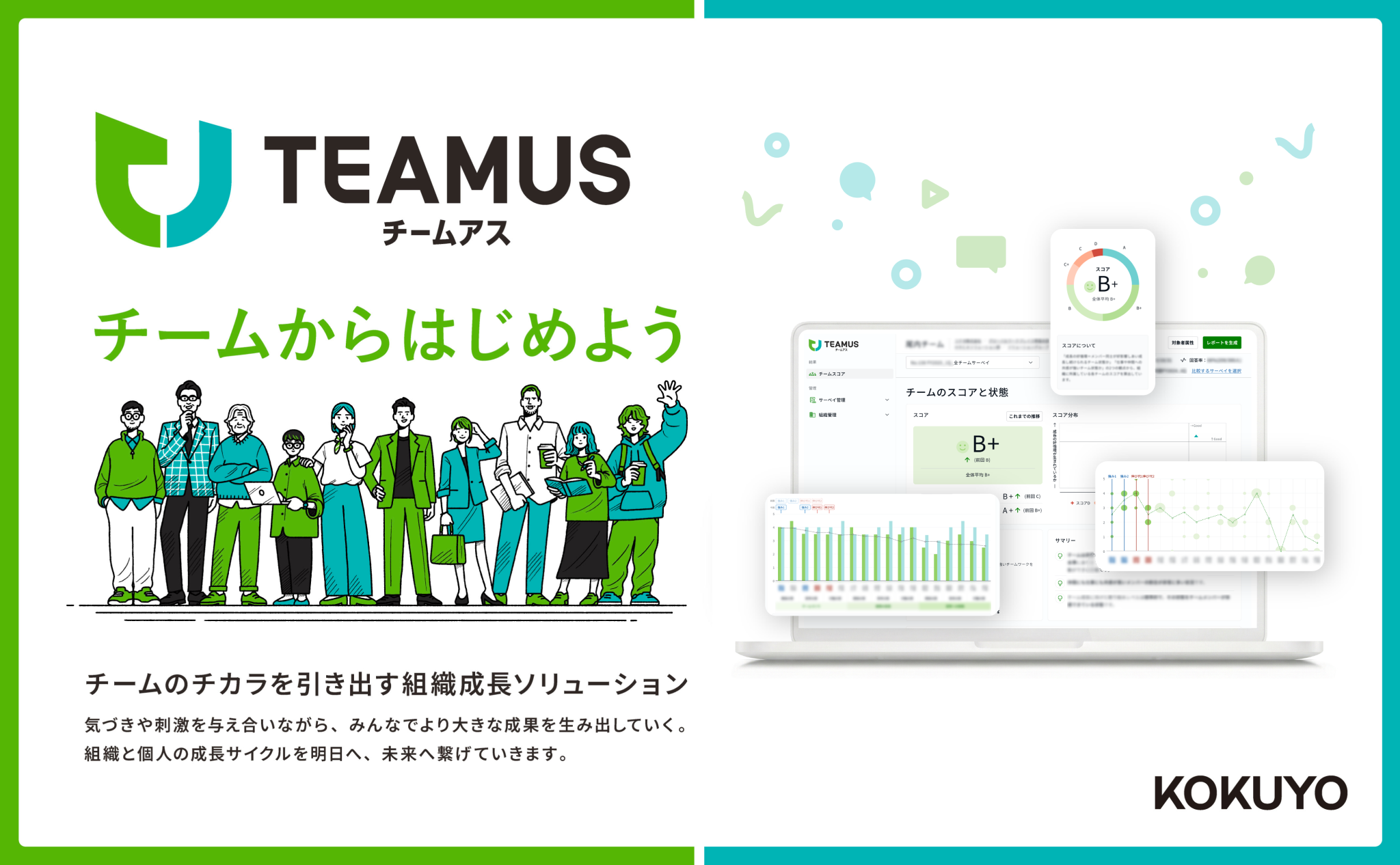
KOKUYO Co., Ltd., known for manufacturing stationery and furniture and for office space design, released "TEAMUS," an organizational growth solution, in May 2025 as a new business in the HR domain. In response to the challenge facing existing organizational surveys and organizational development solutions — that they struggle to win empathy from the front lines — KOKUYO pursued "a positive experience that frontline leaders themselves want to use." As the co-creation partner for this project, Goodpatch provided total support spanning MVP (minimum viable product) development, user experience (UX) design, and UI design. This article introduces the behind-the-scenes story of a project that redefined the nature of organizational development, working as "one team" across company boundaries.
Client
KOKUYO Co., Ltd.
From the manufacture and sale of stationery, including the "Campus" notebook, to the design of workstyles and office spaces and the distribution of office supplies, KOKUYO is a company that broadly supports how people "work, learn, and live." In recent years, the company has gone beyond providing physical products and spaces, focusing also on creating new businesses under its long-term vision. In 2025, drawing on the workstyle expertise it has cultivated, the company launched "TEAMUS," an HR business that approaches the soft side of organizations and talent, expanding its domain as a solution provider that supports corporate organizational growth.
Summary
Challenges before the engagement
- As an enterprise product to be adopted by many companies, a high level of quality and reliability was required from the initial release
- To raise the probability of business success, sophisticated judgment was needed on "what to prioritize in development (MVP)" within a limited period and limited resources
- A structure was needed that could think through optimal solutions together even under uncertainty and rapidly iterate on development and improvement
Goodpatch's approach and outcomes after the engagement
- Experience design that exceeded the expectations of customers and users, and the achievement of high satisfaction
- Overcame difficult development requirements and achieved a product launch on a schedule aligned with the original business plan
- Grew into a scrum team that autonomously iterates on improvements, building a structure in which design and engineering collaborate seamlessly
Supporting How People Work: Taking On Unresolved Challenges
In the office space design business KOKUYO has run for many years, the company faced a nagging question: unless it turned its attention to what happens after an office is built, could it truly claim to be "supporting how people work through offices"?
Under the theme of "solving the essential challenges hidden in customers' 'work,'" and while exploring domains where it could deliver value through market research and target interviews, the company came to believe that truly supporting "work" required stepping into the unresolved challenges in the domains of people and organizations — the very root of the activity.
In organizational development today, I believe there is a structure in which gaps in perception and intent easily arise between the ideals drawn up by management and HR and the activities on the front lines. As a result, including in terms of methods, it is hard to win empathy from the field, and organizational development struggles to move forward. Our theme is how to create a state in which people on the front lines feel "this is something we should do — something we want to do," use the service themselves to advance initiatives, and keep producing results.
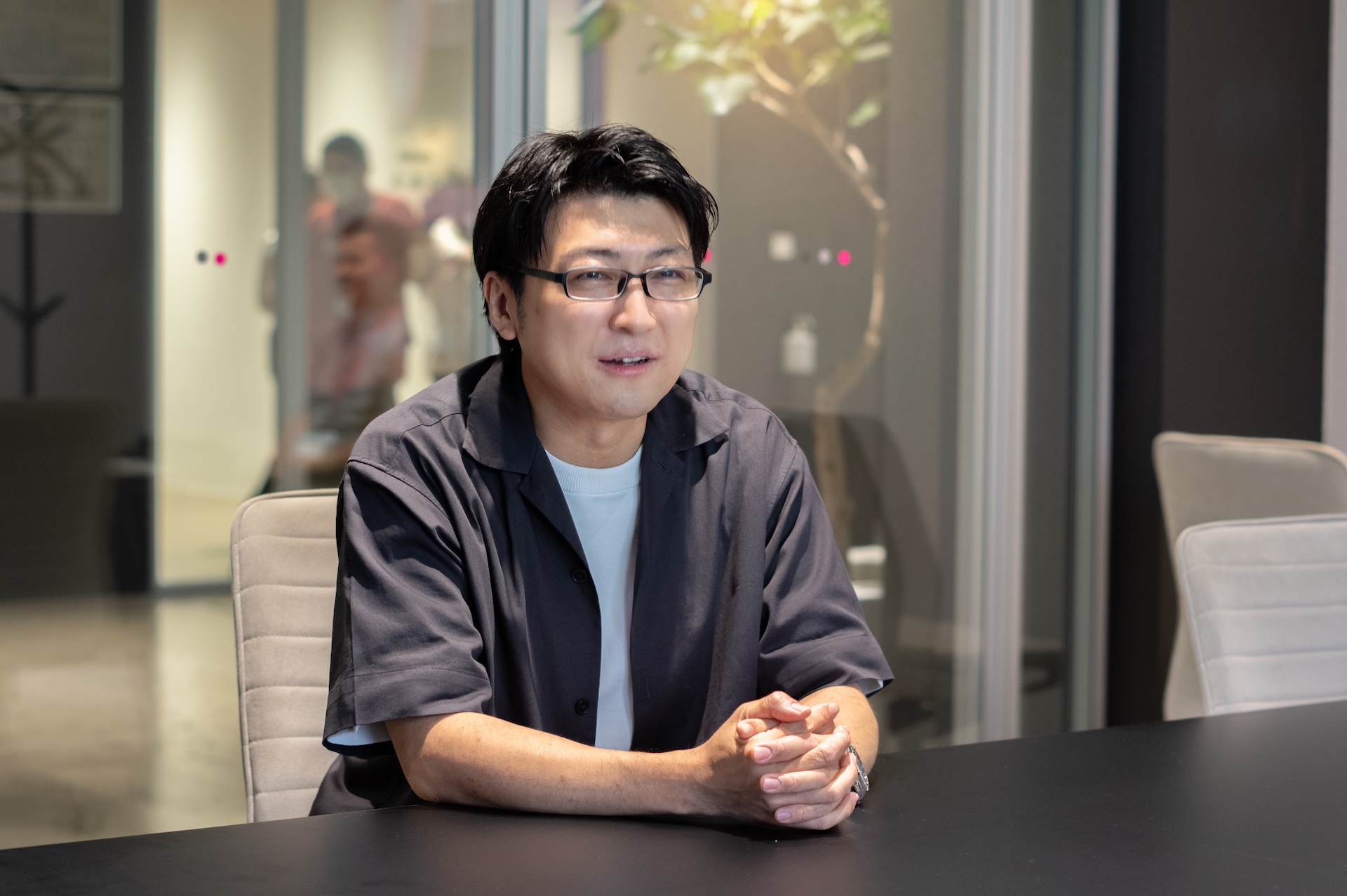
— Taketomo Onouchi, KOKUYO
After conducting a PoC with a prototype, the project moved into the phase of elevating the product into something more refined as a business for enterprise companies. While searching for a partner who could translate the complex user needs of enterprise companies into concrete experiences, KOKUYO reached out to Goodpatch.
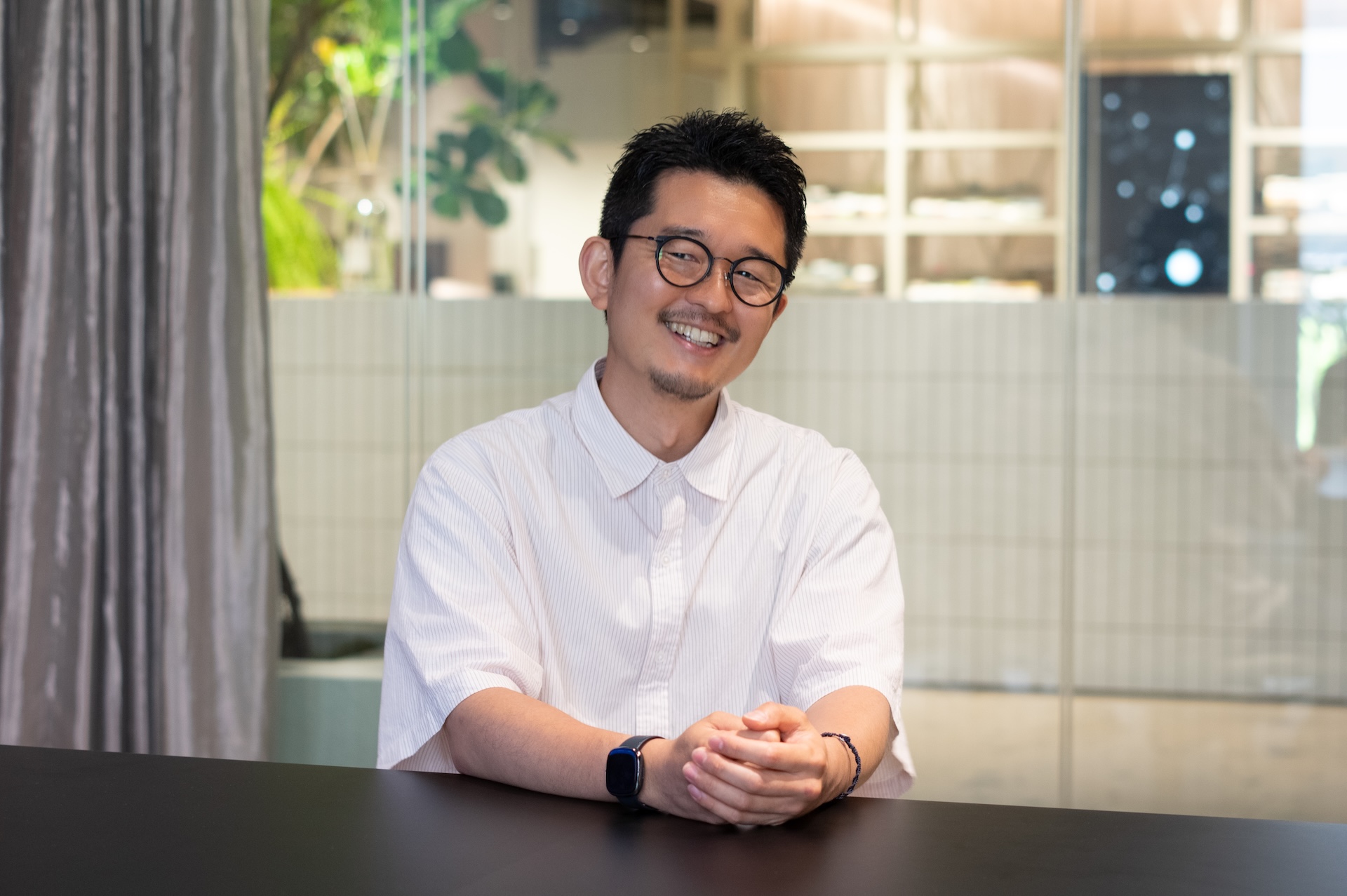
What sealed the decision was that, at our very first meeting, they began with the question "Why are you doing this business?" I felt a difference from the partner companies I had worked with before.
— Nozomu Sakai, KOKUYO
Experience Design That Realizes the "Ideal Team"
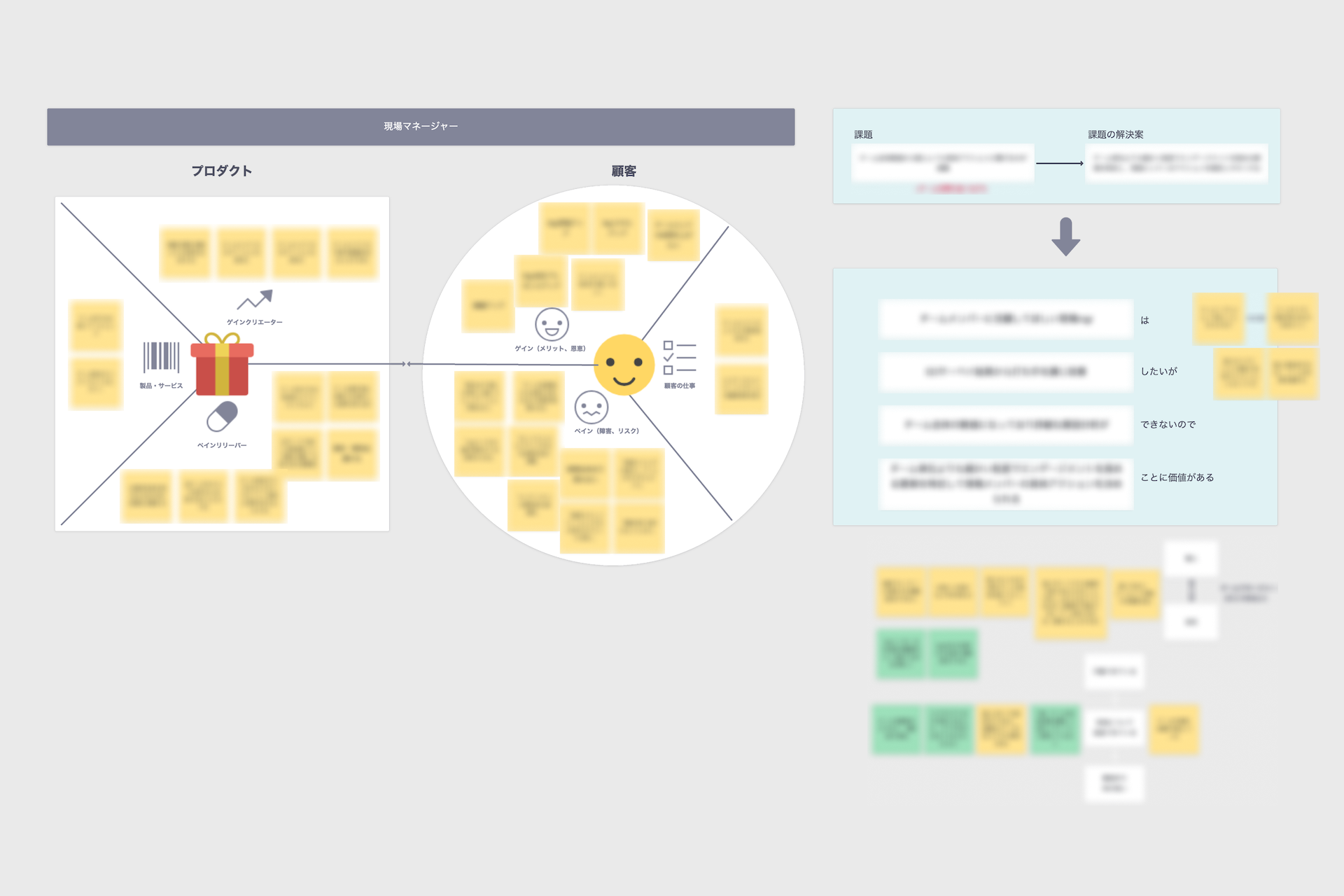
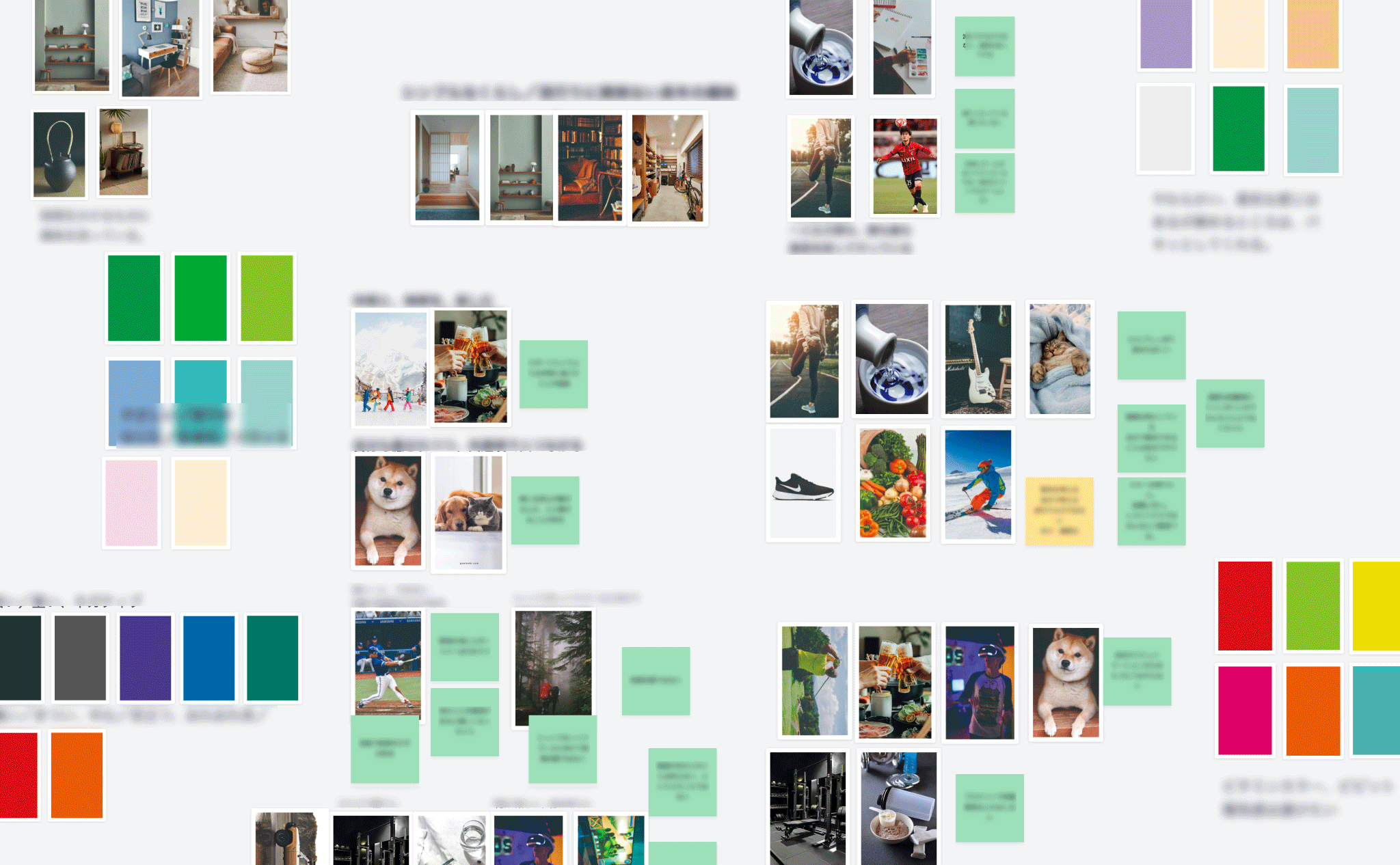
To design the experience KOKUYO aims for with TEAMUS, the team worked through a variety of questions to organize definitions of the ideal team and of what makes a good team. For the intangible theme of "what value can we deliver," the team focused on giving things visible form — words and visuals — at an early stage, so that discussions could be deepened by moving back and forth between the abstract and the concrete.
The team also worked on articulating "what makes TEAMUS TEAMUS." In workshops that put words and visuals to the service's persona and worldview — "If TEAMUS were a person, what kind of personality would it have?" "In what tone would it speak?" — the abstract concept of the "ideal team" was converted into a high-resolution image, building consensus on "emotional value" in parallel with feature development.
In the MVP, from the standpoint of motivating growth, the greatest care went into "how to present survey results and graphs to users." In product development where the balance between the operator's aims and human-factors considerations is critical, Goodpatch, as professionals of the user's perspective, carefully curated specifications and features. Visualization using wireframes was iterated rapidly and translated into UI design.
In fact, people at companies that used the MVP told us things like "How did you understand us that well?" and "Everything we had vaguely sensed as HR people is truly all put into words here." I was deeply grateful, and it gave us confidence.
— Taketomo Onouchi, KOKUYO
Building a Fast Development Structure Prepared for Uncertainty
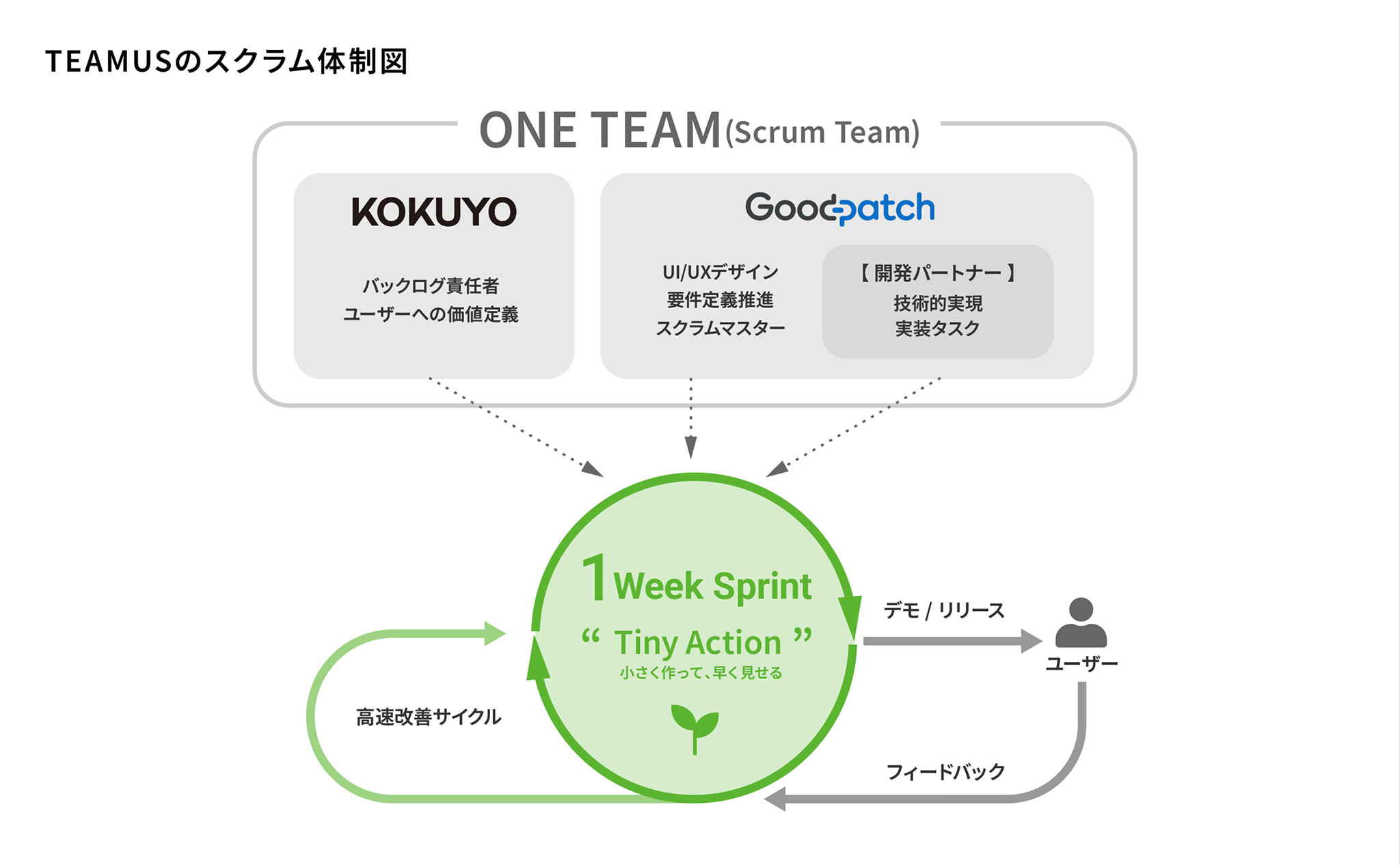
A scrum team was formed across three companies: KOKUYO, Goodpatch, and a development partner. Goodpatch led a structure of more than ten engineers while designing the optimal development process for each stage of the business.
Before launch, to develop strategically in line with the business plan, the team enforced strict scope management using an "estimation sheet" that visualized workload and business priority. By putting the "completion criteria for requirements definition" into writing and building a design system, the team prevented rework while achieving both quality and speed.
After launch, having shifted to agile thinking, the team moved to a structure that iterates improvements at high speed in one-week sprints. Under the three-company joint scrum team's value of "Tiny Action" — build small, show it fast, grow it fast — engineers and designers collaborate closely beyond the client–vendor relationship, establishing an evolving development team that continuously reflects user feedback into the product.
Releasing a Product Infused with the Team's Convictions
The greatest ingenuity in this project lies in the experience design that presents survey results not as "evaluations" but as "suggestions for growth." Whereas many surveys in the market prompt improvement actions through evaluations or low scores, TEAMUS is built on the philosophy that there are as many ways to grow as there are teams, and no single right answer — so even the suggestions based on diagnostic results are designed with room to spare. The diagnostic result "your team type" is one of the measures born from the aim of creating an experience in which teams grasp their own characteristics as their own matter and connect them to their next actions.
Since launch, the product has taken the first steps of organizational development, earning evaluations such as "the team perspective is something we'd never had — this is what we were looking for" and "we had tried numerous services in the past; there was a department that looked fine in conventional services yet kept losing people. When we tried TEAMUS, things we couldn't see with previous services — points that seemed to be causes — became clear."
Moreover, through the repeated discussions with Goodpatch over the course of the project, changes have also occurred in the company's internal culture, such as constructive criticism and essential questioning.
The team has grown in numbers now, but the experience of those discussions with everyone back when we were still few is living on as is. I feel this is exactly the culture we built together with you all, and being able to launch this with you in the team's earliest days has become an enormous asset.
— Nozomu Sakai, KOKUYO
It's precisely the idea that "though our companies differ, we are one team." The "ideal team" we are aiming for with TEAMUS is being embodied not only inside our company but as a team that includes people outside it. For us, as we advance the TEAMUS business, it's a great experience to be having together, and I'm grateful for it.
— Taketomo Onouchi, KOKUYO
Future Outlook
Finally, we asked about the future outlook for TEAMUS.
We have only just started running, but I am feeling anew that there are expectations you only understand after release, and so many things that we in particular should and can do. We want to keep creating services that live up to the expectations of HR and the front lines.
We hold up the motto "the best team experience of your life, for everyone who works." I believe we ourselves need to be the symbol of that best team experience, and we want to deliver that value.
— Taketomo Onouchi, KOKUYO
I think the pandemic made "how we work" something very close to home. It became something recognized not as given by the company but as something you can control yourself. I think it would be fascinating if something similar could happen with teams.
The word "team" is one everyone uses as a matter of course, but I feel it is still something like a company department — hard to make one's own. Through TEAMUS, I hope we can create a world where the awareness of "what kind of team do we want to be" and "in what kind of environment do we want to work" returns to the hands of working people — not only leaders but members too.
— Nozomu Sakai, KOKUYO
Interview
Further details of this project are also available in this interview: KOKUYO's Organizational Growth Solution "TEAMUS": Teaming Up with Goodpatch to Build a Product Carrying Their Feelings for Teams
Credit
Producer: Takahiro Kinoshita
Project Manager: Mifuyu Tanabe
Product Manager: Issei Sakuma
Product Manager: Kenji Ishida
Product Designer: Saori Miyachi
Product Designer: Umi Arisue
Product Designer: Honoka Hirao
Inquiries about this project
For questions or consultations about this project, please feel free to reach out using the form below.




Get In Touch
Talk to us about anything—UI/UX design for services and products, brand building, AI adoption, new business development, or management and business strategy.